Saturday, July 13, 2013

Maasai Mara : Elephants And Monkeys

One animal that really fascinates me is the Elephant. Most people are not aware how intelligent and emotional elephants are. The African Elephants live in a tightly knit family led by a matriarch. Babies and calves are at the center of the family's attention. Their intelligence is comparable to apes and dolphins, but emotionally they are perhaps the most advanced of all the wild species. They have been recorded to show remarkable altruistic behavior, and showing empathy not only for other elephants, but towards humans and other animals too. Elephants show self-awareness, as well as a great understanding of life and death. They grieve their dead, exhibit some sort of burial rituals and remember their family members forever. They are friendly and caring animals. Very unusual for a wild species.

In the outskirts of Nairobi, is an Elephant Conservatory which takes in orphaned baby elephants, raise them and then release them back in wild. Most common reason for them losing their mother is poaching. For ivory. Its really heartbreaking to see the wobbly walk of this 2 month old motherless calf. It still needs a blanket to help regulate its body temperature.


There are so many of orphans. Elephants are a "keystone species", necessary for protecting the environment. Hence the conservation efforts are essential.


They are taken good care of. But they are not allowed to get too friendly with humans, as they have to go back to the wild, and then stay away from potential poachers.


Growing up in India, I have had many opportunities to see and touch an elephant. But seeing them in wild, freely enjoying their life, protecting their young in their in large families is a wonderful experience.

A solitary elephant, probably a male, as the adolescent males leave their family to start their own.


This is a small family, with babies born perhaps an year apart.


Elephants make excellent photographic subject!


We came across a fairly large family, with many babies in all sizes.


They were happily playing with each other for a while. Such a magnificent creature, and we humans kill it just for its teeth so that we can make some trinkets!

It was obvious who was the matriarch. She was the largest and never took her eyes off us.


Once more and more safari vehicles started arriving to see them, the matriarch got uncomfortable and quickly led her family away.


For more photos of elephants, check out the set on Flickr.

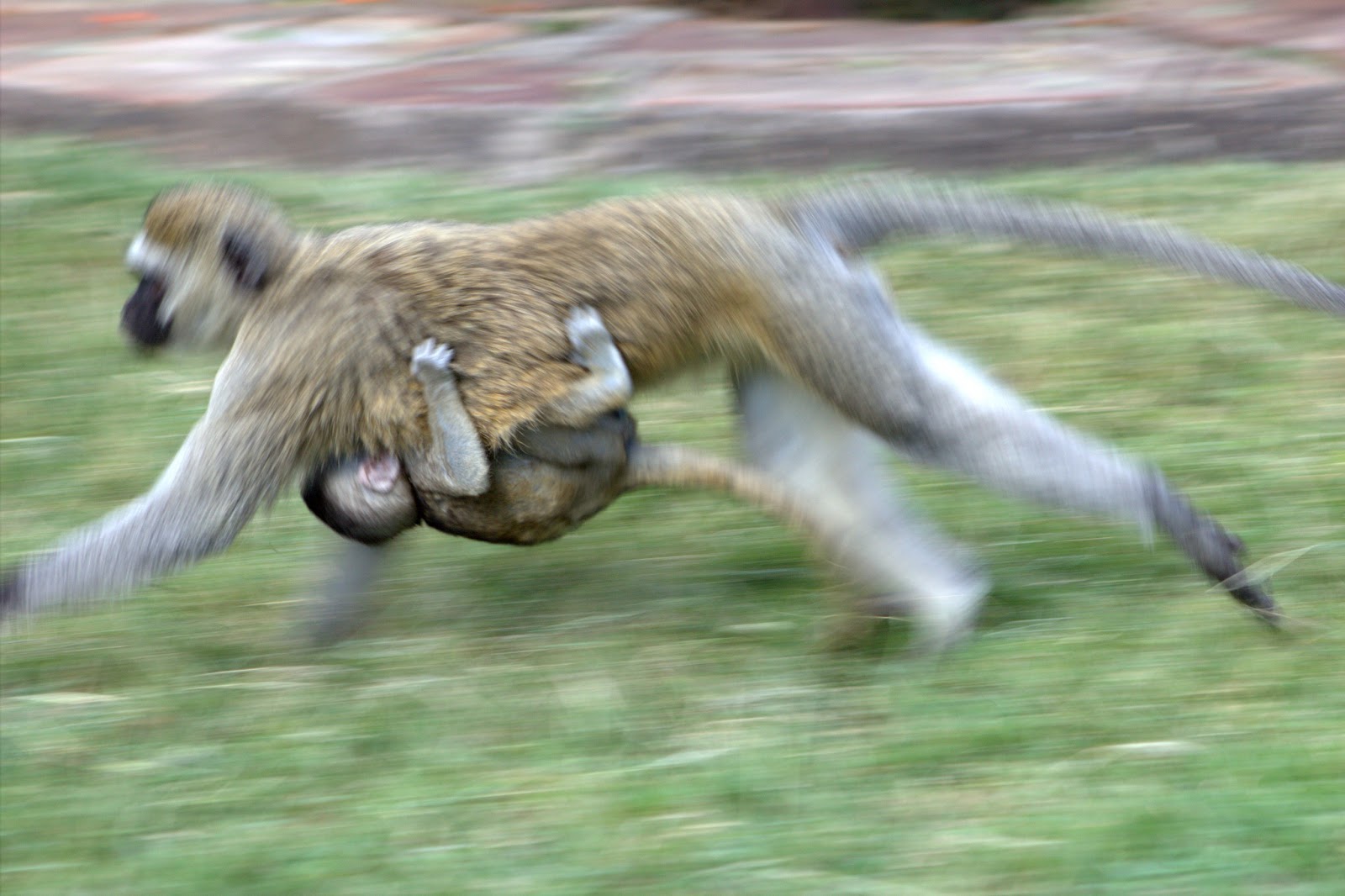
Comparable to Elephants, Monkeys also display intelligence and care for their young. But it's more obvious to us, as they look a lot like us.

They are also pests and create quite a bit of nuisance. Apparently they love the honey from the flowers of this plant, "golden shower".


One was curious enough to check out what's in my tea cup :-).

Not finding it tasty, it ran away.


The next is a baboon, a very aggressive and dangerous creature.


The colobus monkey is quite good looking.


You can click on any photo to start a slideshow.

For more photos of monkeys, check out the set on Flickr.

Friday, July 12, 2013

Maasai Mara : Buffalo And Antelopes

You can click on any photo to start the slideshow.

In addition to the 2 million strong population of zebras and wildebeests, there are many other grass feeders in Maasai Mara. The Cape Buffalo is considered one of the "Big Five". It is indeed very massive, but what has made it famous is its dangerous nature. They unite together to extract revenge on the attackers, be it lions or human hunters. Entire herd joins in to ferociously protect their young.

The face has a clear expression, 'Don't you mess with me'.

The white spots below the eyes indicate that it's an older buffalo.

Birds are happy eating the insects on their back, and buffaloes are happy to get rid of the pests. A mutually beneficial relationship.

This was the largest heard we saw.

For more photos of the buffalo see the set of Flickr.

Then there are many species of antelopes. We got to see all the major ones. Maybe the biggest is the waterbuck. It's a misleading name, as they don't spend much time in water.

Hartebeests are also a large antelope, and generally very clam.


Topi is very similar to the hartebeest, but much darker in color. I do not have any photos of just the topi, they were always together with some other animals.


Smaller than these, is the impala. With a beautiful golden brown coat and stunning horns, which is a very distinctive feature and makes it easy to identify them. My favorite of all antelopes.


Look at this beauty!

Smaller than impala, is the Thompson's gazelle, the absolute favorite food of the cheetah, due to its small size. They have distinctive black stripes across their body.


All these antelopes are often found together in the savannah, in various combinations.

Zebras, topis and impalas.

Zebras, impalas and gazelles.

And all of these together!

The smallest and the shyest of them is the definition of cute. It also has a funny name : Dik-dik.


All these animals are abundant in the Serengeti / Maasai Mara area. For more photos of these antelopes, check the set on Flickr.


Wednesday, July 10, 2013

Maasai Mara : Zebras and Wildebeests

Serengeti is a huge region mostly in Tanzania. The part of it that is in Kenya, is called Maasai Mara. It's considered on of the natural wonders of the world, due to "The Great Migration". An estimated 2 million animals move as part of this migration, following the rains and fresh grass. This large collection of herbivores support a high population of predators, especially lions, leopards and cheetahs. Hence it has provided a frequent settings for documentaries related to nature and made it a popular tourists destination.

Watching this migration is an experience that simply cannot captured. Neither in words, nor in pictures. The documentaries have captured amazing moments and unforgettable scenes, but there is nothing like being surrounded by countless zebras and wildebeests, stretching as far as you can see.

You can click on any photo to start a slideshow.

In the picture below, all the dots in the distance are wildebeests!


They often form a single line while moving.


The wildebeest is not a particularly good looking animal. But they are crucial in supporting the ecosystem and the circle of life here.


Even the babies are not all that cute.


The zebra on the other hand is a beautiful animal.


Their babies are adorable.


Sometimes, all you can see is zebras, without wildebeests.

For more photos, check out the set of photos on Flickr.

Sunday, June 9, 2013

Diary Of A Rose - Part 1

The first bloom of 2013 is over. This year, I tried taking photos of the roses as they go through various stages of the bloom.

Exactly two years ago, (see post here) I moved this rose plant, and it took a while for it to recover from the shock, but it has come back strong.

First, a few photos of some flowers as they were blossoming. Some have been taken with my Samsung Galaxy 3. Others with a prime lens, and it's obvious which are these :-)

You can click on any photo to start a slideshow.

First the young buds.


As I captured previously (see post here), ladybugs are frequent visitors on a rose plant due to aphids.


Blossoming !


Getting bigger and bigger.


Even bigger.


A size comparison is needed to truly appreciate the size of these flowers. Every flower is size of a small cabbage. :-)


Now some photos of the plant in the full glory - in different stage of blossom.


Related Posts Plugin for WordPress, Blogger...